
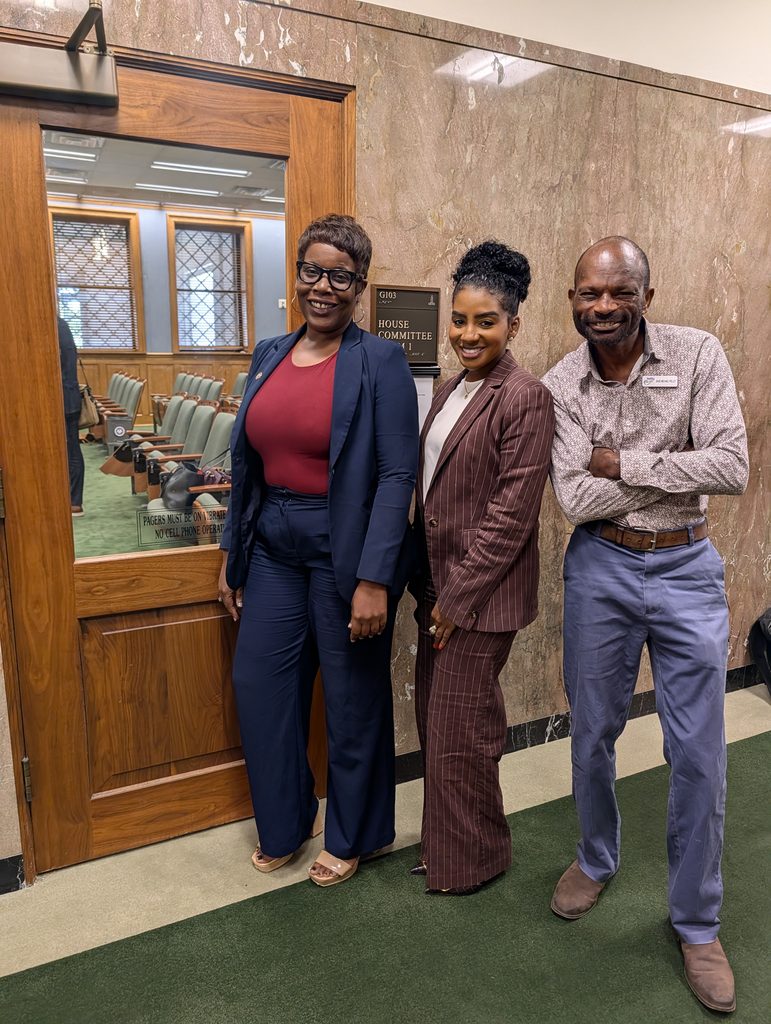
On August 21, I walked into House Committee Room 1 at the Louisiana State Capitol for the first meeting of the Louisiana Task Force on Illegal Dumping Prevention and Enforcement.
I was there representing Healthy Gulf, but I was also carrying the voices of New Orleans East residents who have lived with illegal dumping for years.
This issue is not new to us. Residents have documented dumping, called 311, organized cleanups, removed tires, beautified their neighborhoods, and continued demanding action. Government employees, organizations, and elected officials have also been working. The problem was that too much of that work remained disconnected.
Progress began when the right people came to the same table.
I had the opportunity to present alongside Jessica Strange, Community Liaison for the Orleans Parish District Attorney’s Office. Jessica and I shared the history of the work that happened before the task force was created and explained what made this statewide progress possible.
Our partnership connected my work as Healthy Gulf’s Climate Justice Organizer with Jessica’s government relationships, enforcement knowledge, and community engagement work. We brought our networks, information, and resources together. That collaboration helped us develop a comprehensive strategy for addressing illegal dumping.
Our collaboration also brought together the technical resources of both organizations. Scott Eustis, Healthy Gulf’s Community Science Director, and Ryan Gomez, a data analyst with the Orleans Parish District Attorney’s Office, collaborated to create the illegal dumping heat map. By combining community reports, field observations, and available data, the map helped identify recurring dumping hot spots and visually confirmed what residents had been reporting for years.
The data confirmed what residents already knew.
Our strategy also grew through planning meetings with community members and representatives from Councilmember Jason Hughes’ District E office. District E includes New Orleans East and the Lower Ninth Ward, where many recurring dumping hot spots are located. His staff helped us prepare for an executive-level meeting with the mayor’s administration, where community members and government representatives discussed the problem, gaps in the existing response, and the need for a comprehensive strategy.
Councilmember Hughes and his office have remained engaged, and he now serves on the State Illegal Dumping Task Force. This provides an important connection between New Orleans East, city government, and the statewide effort.
The next major connection was with State Representative Alonzo Knox of House District 93. Representative Knox met with Jessica and me, reviewed our strategy, and helped move it forward through House Concurrent Resolution 85. That resolution established the statewide task force and set a timeline for recommendations ahead of the 2027 Regular Legislative Session.
The first meeting was chaired by Louisiana Department of Environmental Quality Deputy Secretary Nathan McBride. Holding the meeting inside the Capitol, gave the task force institutional ownership of the work.
We did not just talk about the problem. We discussed policies, enforcement gaps, available resources, data, technology, prosecution, and who must be connected to move solutions forward. The first meeting demonstrated the benefits of bringing everyone to the same table.
WBRZ’s coverage highlighted the areas of work I presented. The report noted my call for education to prevent dumping and enforcement that includes “investigating and holding those who illegally dump accountable.” It also highlighted remediation, restoration, policy implementation, contractor accountability, and the high number of illegally dumped tires.
When a fine costs less than proper disposal, some operators may treat illegal dumping as a business decision. That is why we need a clear path from a community report to investigation, evidence collection, case referral, and prosecution.
Illegal dumping is an environmental and environmental justice issue. It threatens our land and water, obstructs drainage, attracts mosquitoes and rodents, and lowers the quality of life in communities already facing pollution and disinvestment.
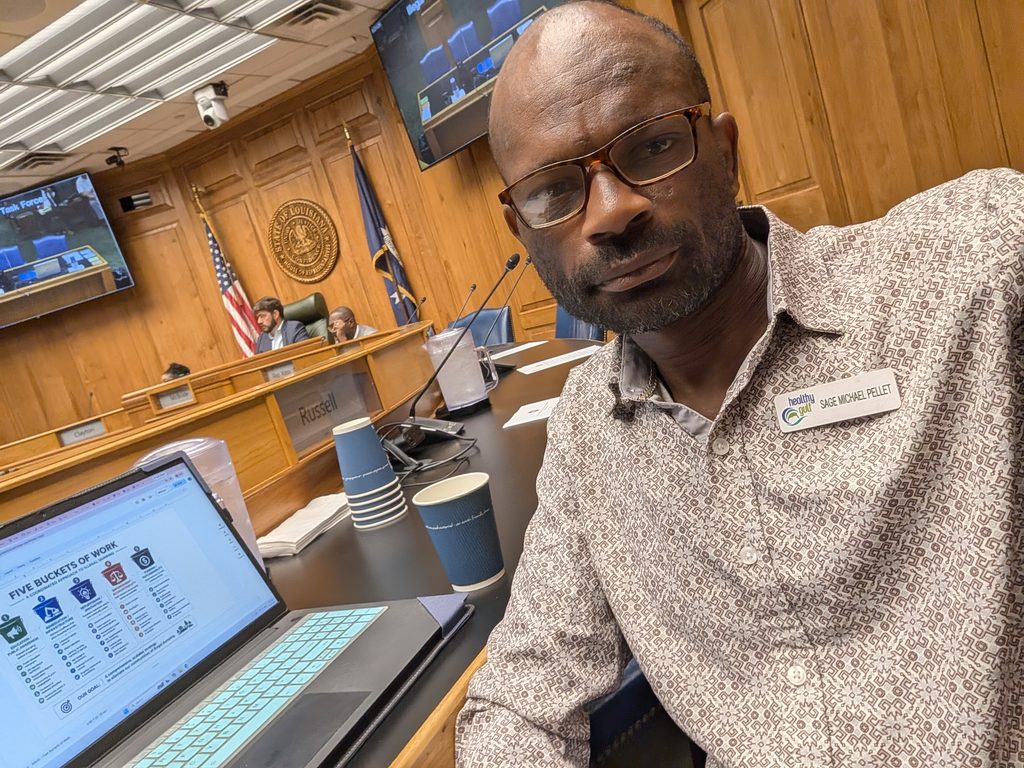
We fight this through Healthy Gulf’s Climate Justice campaign. The work also intersects with our Southeast Louisiana Petrochemicals campaign, led by Gregory Swafford. Both efforts raise important questions about accountability: Who benefits, who carries the environmental costs, and who is responsible for repairing the harm?
The financial cost is also real. More than 60,000 illegally dumped tires have reportedly been removed from New Orleans East locations. DOTD officials have said recurring cleanups have consumed millions in taxpayer resources and pulled crews away from pothole repairs, mowing, drainage work, and other public services.
We cannot keep paying to clean the same locations without addressing what causes the dumping.
During the meeting, I presented a comprehensive strategy for coordinating the response to illegal dumping. The strategy brings together government agencies, enforcement partners, community organizations, and residents while organizing the work into five key areas: education, remediation, enforcement, repurposing, and funding. This structure can help clarify responsibilities, reduce duplicated efforts, and direct resources toward the communities and locations where they are most needed.
The Orleans Parish District Attorney’s N.O.D.I.C.E.—New Orleans Data-Informed Community Engagement—program gives us another model to adapt. It demonstrates how data, technology, community knowledge, and coordinated resources can address problems at their roots.
The statewide task force meetings are public. Residents, community advocates, and organizations can attend and provide public comment. The people most affected by illegal dumping must have a meaningful voice in shaping the recommendations. We should build upon their knowledge instead of asking communities to start over.
The task force will meet again in October. Before then, I, along with Healthy Gulf, will host a citywide Illegal Dumping Convening at the end of September.
The convening will bring together residents, organizations advocating against illegal dumping, neighborhood beautification and litter-abatement groups, government agencies, organizations supporting community-led work, and members of the statewide task force. Key task force members will also be invited to make presentations.
Our goals are to get informed, build a stronger network, boost the work already underway, and workshop local and state recommendations. We will also identify local and state actions that can begin moving forward today without waiting for the final legislative report.
This is not about holding more meetings. It is about commitment, consistency, true cross-collaboration, and following through with real action.
These efforts show that together, we are stronger.
We are not reinventing the wheel. We are building the wheel so that we can roll together.