
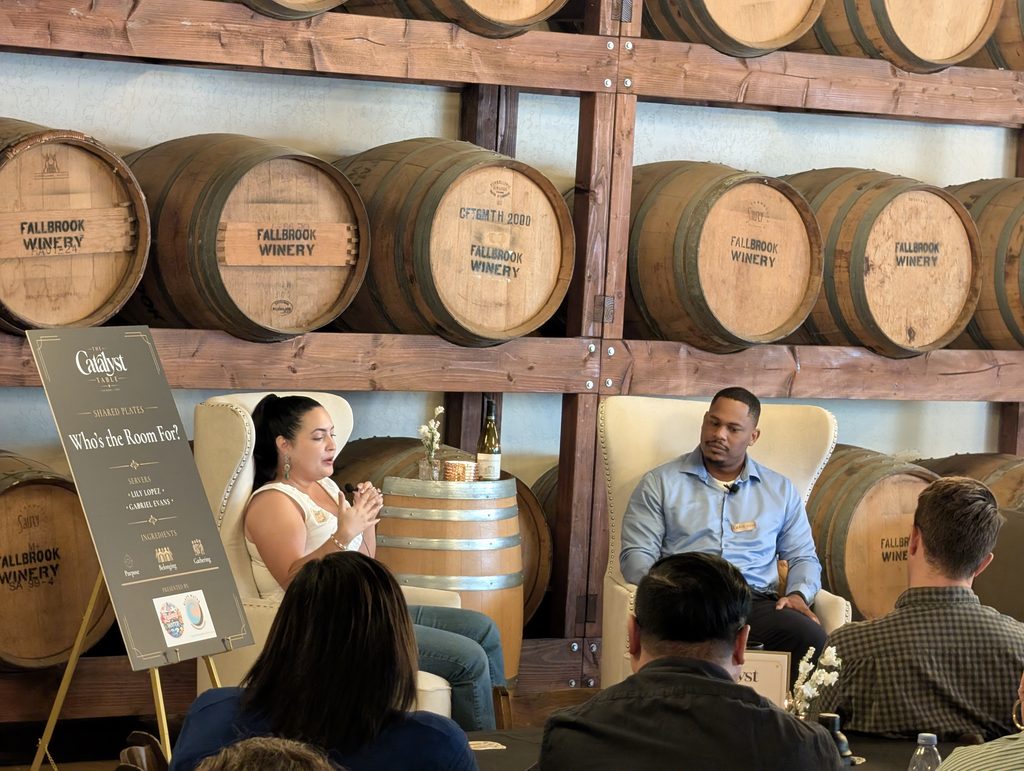
Through the support of The Kresge Foundation, I had the opportunity to attend Catalyst 2026 in San Diego. I am especially grateful to Yeou-Rong Jih, Program Officer with The Kresge Foundation’s Environment Program, for making this experience possible.
Catalyst was a three-day gathering curated by Rogue Water Lab to explore public trust and community engagement. The experience brought together utility professionals, communicators, public officials, researchers, and community advocates at The Westgate Hotel and across several locations in San Diego.
I arrived as a climate organizer, community advocate, and water advocate—not as a utility employee. That distinction shaped how I listened, what I noticed, and what I contributed. At times, I felt like an anomaly or even a unicorn in the room, but I came to understand that my perspective belonged at the table.
DAY ONE: THE TASTING MENU
From the moment I arrived, the experience felt intentional. I received my credentials and materials while a saxophonist played in the background. Even the welcome reception offered a lesson in hospitality. I ordered a cocktail and watched the care that went into preparing and serving it. Trust can begin with something as simple as being welcomed, seen, and thoughtfully served.
The first day used a tasting-menu framework to introduce the experience. We moved through ideas represented as courses: the Tasting Menu, the Community Table, and the Chef’s Table. Food was more than a theme; it became a language for understanding trust.
One exercise used an artichoke heart as a metaphor. To reach the heart, you must work through the layers. Trust is similar. It is rarely immediate. It is built through repeated actions, honest communication, care, and time.
I shared that I have worked as a barber-stylist for more than 30 years. People do not sit in a barber or stylist’s chair only for a haircut. They talk about family, work, health, fears, and dreams. Over time, the chair becomes a place of trust. That background has taught me that people remember whether they felt heard and respected.
Throughout the convening, I wanted to be mindful of the space I occupied. I know that my passion, curiosity, and thoughts can fill a room, so I made an intentional effort to listen more. Still, I felt confident offering input when it could help, and my quick wit brought humor to several sessions.
Participants received golden stars to acknowledge one another. I gave one to Aisha from Mississippi after learning about her experience with politics, lobbying, the U.S. Army Corps of Engineers, and water systems. Her story connected with my own work and with conversations I have had back home about water and environmental justice.
At the end of the day, I joked that my Central Time Zone Southern body was ready for rest. Even that moment reflected the warmth of the gathering: people were learning together, but we were also laughing together.
DAY TWO: THE COMMUNITY TABLE
I began the second day with a latte from Goldchild, a coffee shop with a lively hip-hop atmosphere and memorable flavors. That small stop set an energetic tone for the day.
We traveled by bus to Balboa Park, where we were encouraged to become “line cooks”—to listen carefully, observe, and learn how trust is created in real interactions. The outdoor setting mattered. Balboa Park invited curiosity in a way that a windowless meeting room could not.
Jennifer Tabanico led a session called “Before the Message: Diagnosing Behavior.” One exercise involved speaking with members of the public about electronic billing. I partnered with Gilberto, and we approached younger visitors first. Many of them said they did not pay utility bills yet. Instead of ending the conversation, I asked about their parents and households. That changed the discussion. One young woman even called back to us, “Hey, I have a few more things to add.”
That moment stayed with me. People often have more to say when they sense that someone genuinely wants to hear them.
We also spoke with German-speaking visitors and an older man wearing Mountain Dew socks who told us about his son, a chiropractor. These brief encounters reminded me that curiosity opens doors. The goal was not to force a message but to understand the person in front of us.
Other sessions explored shared ownership, local priorities, and the reality that no two communities are alike. We discussed situations where a project has no clear owner, as well as the ways elected leaders’ priorities shape public decisions. The contrast between the park setting and more traditional office environments—with ceiling tiles, slide presentations, and boxed lunches—felt intentional. The environment in which engagement happens affects how people show up.
We also learned that listening is not passive. It requires preparation, good questions, flexibility, and a willingness to be changed by what we hear.
DAY THREE: THE CHEF’S TABLE
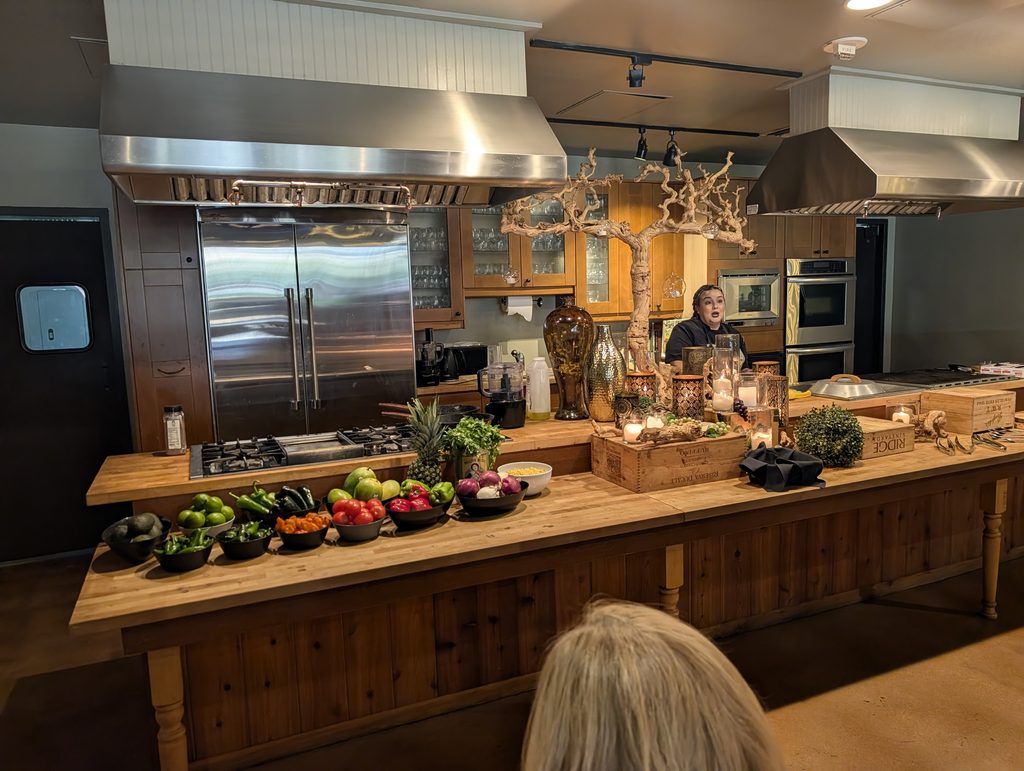
The final day brought us to the San Diego Wine and Culinary Center for the Chef’s Table. The setting reinforced a central lesson: ingredients matter, but so does how they are combined and served.
Chef Daisy demonstrated how to make quick dips and salsas in several ways. As a foodie, I loved this part—and clearly, so did everyone else in the room. She showed us that simple ingredients can create something memorable when handled with care. I plan to use those skills back home.
I also sampled the hot salsa as a personal challenge. I survived, but I quickly hustled to the water table.
The cooking demonstration became another metaphor for community engagement. A recipe provides direction, but a good cook still has to pay attention to the people being served. In community work, there is no universal recipe. We must understand local history, culture, needs, and priorities.
Greg Wukasch led a session on designing how people show up. Chelsea Boozer helped close the experience by asking us to make practical commitments. Mine included inviting young people into conversations, simplifying complicated information, helping residents feel seen, and leading with curiosity.
One commitment stood out: “I will stop talking and start listening.” For me, that did not mean silencing my voice or making myself smaller. It meant becoming more disciplined about when to speak, when to ask a question, and when to make room for someone else.
HEARTFELT ACKNOWLEDGEMENTS
On the last day, I received two acknowledgements that meant a great deal to me.
Christian, a utility professional who was new to his role, pulled me aside and handed me a gift bag. Inside was a San Diego T-shirt and a postcard with heartfelt words. Although our time together had been brief, he wrote that I had made a good impression and that he wanted us to stay in touch.
I also received a star from the lead organizer. Sue marveled at the enthusiastic round of applause I received. That moment reminded me that listening more does not require me to dim my personality. My passion, curiosity, humor, and lived experience can contribute to a room while I also create space for others.
CORONADO BEACH: BEAUTY AND A HIDDEN HAZARD
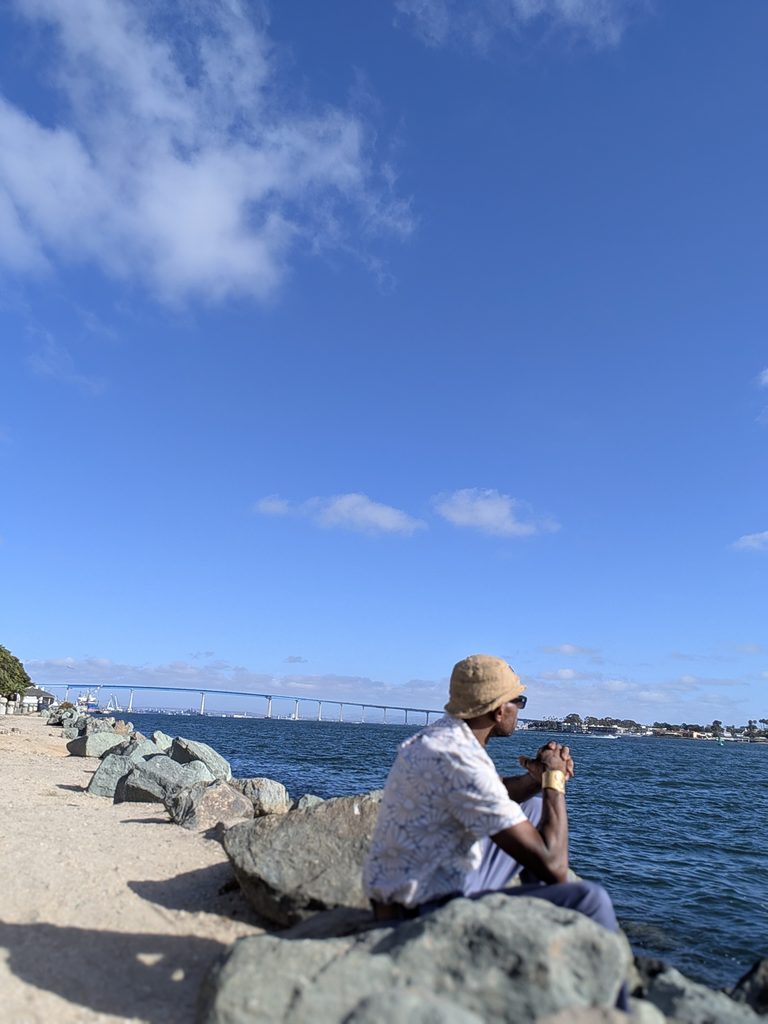
On my last day in San Diego, I visited Coronado Beach. When I entered, I saw a sign directing visitors to the right, but my curiosity had already begun scanning the sand to the left for discoveries. Then I heard a voice behind me: “Sir, you have to go right.”
To the left was the direction of Mexico. I had no desire to cause confusion, so I answered, “My bad. Thank you, sir,” and headed the correct way.
Before the trip, I had seen news coverage about sewage flowing from Mexico through the Tijuana River and affecting parts of Southern California, including the Coronado area. The beach looked beautiful, but I noticed that people were not touching the water.
I asked a local person what he thought about the water quality. He described entering the water as a “50/50 chance.” He and I agreed that neither of us wanted to take that chance.
The air also carried a strong odor that reminded me of wastewater and made me think about hydrogen sulfide. Smell alone cannot identify a specific chemical or determine its concentration, but the odor made the environmental hazard feel immediate.
I could not help thinking about the Dwyer Canal and other places back home where sewage discharges and water-quality threats can remain hidden from people who live nearby. A beautiful scene can conceal a serious risk. Communities need reliable monitoring, timely warnings, clear communication, transparency, and accountability. Beauty should never be mistaken for safety.
BRINGING THE CONNECTIONS HOME
I look forward to welcoming Catalyst participants and other water professionals to New Orleans for WEFTEC 2026, scheduled for September 26–30 at the Ernest N. Morial Convention Center.
As a New Orleanian, climate organizer, community advocate, and water advocate, I want to help connect visiting professionals with the residents and advocates who understand our local realities. Conferences are valuable, but their greatest impact comes when professional knowledge meets community experience.
Catalyst reinforced that there is no universal recipe for public trust. Every community has its own history, relationships, concerns, and strengths. Still, several ingredients remain essential: hospitality, curiosity, service, transparency, consistency, accountability, and genuine listening.
I will follow up with the people I met. I will also thank Chelsea Boozer and the Rogue Water Lab team for leading such a thoughtful experience, and I will give a huge thank-you to Yeou-Rong Jih and The Kresge Foundation for the opportunity.
I returned home with more than notes. I brought back new relationships, practical tools, fresh questions, and a stronger commitment to building a better table—one where residents, young people, professionals, advocates, and leaders can all contribute.
The courses may be over, but the relationships and responsibilities continue.