
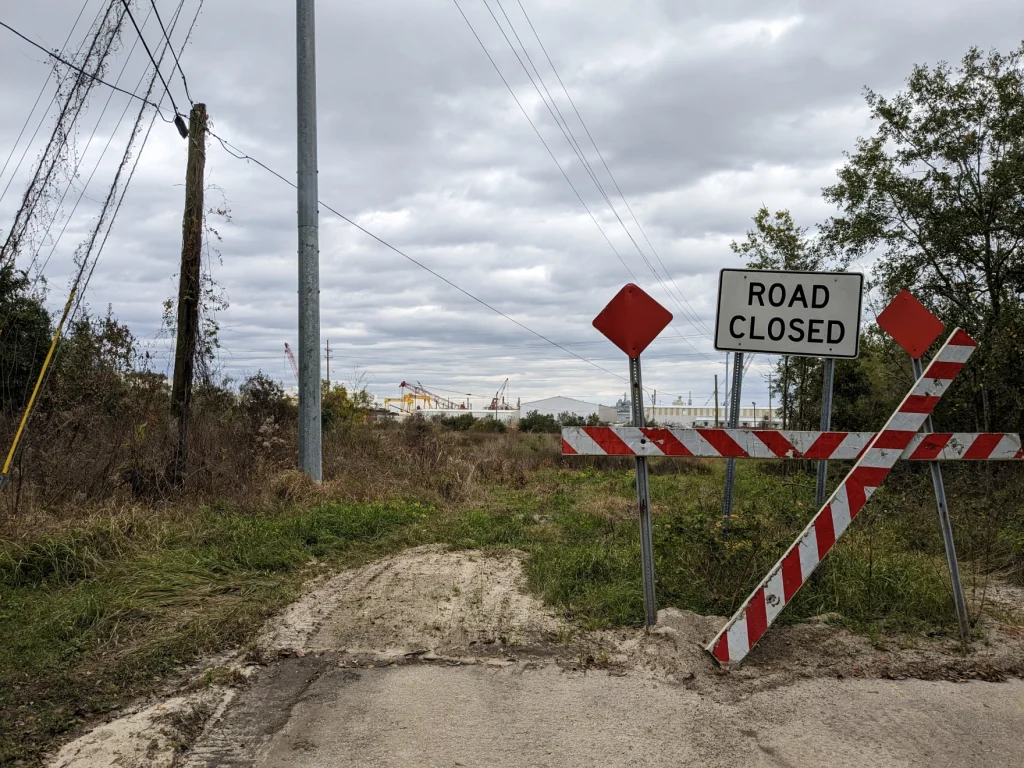
Healthy Gulf has participated on the technical advisory panel for a planning project in Pascagoula Mississippi that would help residents in the Cherokee Forest subdivision relocate and leave a neighborhood that has been afflicted by industrial air pollution and coastal storm surge flooding.
The Relocation to Restoration or R2R planning for residents of Cherokee Forest subdivision in southeast Pascagoula is funded by the National Fish and Wildlife Foundation (NFWF), made available as post oil spill restoration money for Mississippi. It is sponsored by Buy-in, a non-profit that helps with relocations, and by Cherokee Concerned Citizens (CCC). Jennifer Fasolino of Buy-in and Barbara Weckesser of CCC and many collaborating scientists, urban planners and modelers have led multiple stakeholder meetings over the past three years and have condensed their work in a recent report (Link): https://buy-in.org/pascagoula
Air pollution from a nearby Chevron refinery and from shipyard operations on Bayou Casotte has drifted into the yards and streets of Cherokee Forest residents for decades. Storm surge from Hurricane Katrina turned many homes there into slabs, bathing homes and yards with toxic oily residue and many of those homes have never been rebuilt.
This plan to relocate residents elsewhere and then restore the neighborhood as a blue-green buffer has generated interest and momentum from residents. The neighborhoods to the west of a restored wetland forest in the former subdivision would benefit from preserved tall trees and newly planted vegetation that can block and capture drifting dust from shipyards and other industry. Restoring wetlands along Bayou Chicot would help manage stormwater and tidal flooding.
Jennifer asked Andrew Whitehurst, Water Program Director at Healthy Gulf to participate as one of the technical advisory committee members. Healthy Gulf has followed the various Gulf Coast projects like the Isle de Jean Charles community’s managed retreat in the face of coastal land loss. This is the first managed retreat Healthy Gulf has encountered involving people faced with both coastal flooding and fenceline pollution from heavy industry. The R2R project is on the cutting edge of ways to help Gulf Coast communities deal with these unfortunate realities.