
With early voting underway, Florida and the nation’s environmental protections are under threat. We have put together a brief roundup of Florida legislative issues and open action alerts.
Stop BAJAA from Destroying Environmental and Cultural Protections
The Bipartisan American Affordability and Jobs Act (BAJAA) severely weakens the ESA, Clean Water Act, NEPA, and the National Historic Preservation Act.
If passed, this bill would make it next to impossible to challenge or prevent offshore industry, locking in oil and gas and mining projects approved under the Trump Administration.
As a nonprofit organization working to protect Florida’s environment and public health, Healthy Gulf has serious concerns about Amendment 3 on the November election ballot. This ballot measure promises to increase the homestead exemption for property owners and was approved for the ballot during a hasty two-day special session of the legislature in June, called by the governor with only a few days’ notice.
If approved by voters, Amendment 3 would significantly reduce revenues to Florida’s cities and counties, with reductions in property tax revenue ranging from around 3% to as high as 45%, with most in the range of 15% – 30%. These revenues fund a variety of critical everyday services for Floridians, from police, fire protection and libraries to a number of environmental services.
Those environmental services include parks and the purchase of land for new parks, along with stormwater facilities that treat polluted runoff and reduce flooding. Other critical environmental services include planning and environmental staff who review new development projects to ensure that they are legally sufficient and protective of neighboring properties and the environment. Without sufficient staff, parks will degrade and new development projects will not receive thorough review for their environmental and community impacts.
In addition, Florida’s water resources are overseen by five regional water management districts, which manage water supply, protect water quality and work to reduce flooding. These districts would lose large amounts of funding under Amendment 3, at a time when the state’s water resources are more strained than ever from poor development practices and the overpumping of groundwater. For example, the South Florida Water Management District would lose nearly $100 million in annual funding, threatening the ability to make critical progress on Everglades restoration and reduce outbreaks of harmful algal blooms that have plagued south Florida.
Instead of a rushed constitutional amendment that has not allowed time for a thorough consideration of impacts, the people of Florida would benefit from a proper review of tax issues by the Florida Taxation and Budget Reform Commission. The Commission is established in the state constitution and must meet every 20 years to “examine the state budgetary process, the revenue needs and expenditure processes of the state, the appropriateness of the tax structure of the state, and governmental productivity and efficiency.” The Commission includes both citizens and elected officials and is already scheduled to convene in 2027.
We believe that the passage of Amendment 3 will result in less protection of Florida’s environment and a diminished quality of life for Florida residents.
Background information
- While homeowners save, a state economic analysis predicts local governments could lose nearly $5 billion if Amendment 3 passes. Those losses would rise to approach $9 billion the next year, with an eventual recurring impact of nearly $12 billion.
- Property Tax Study – Florida League of Cities
- Florida’s Amendment 3 could slash property taxes — and reshape local services
- Florida GOP endorses Amendment 3 — American Planning Association opposes
- Property Tax Amendment on November Ballot Poses Immediate and Lasting Threat to Florida’s Environment | Audubon
- Sierra Club Florida Urges Floridians to Vote No on Amendment 3
As I walk along the sugar white sand beaches of the Florida panhandle where I live, I look out on the blue-green waters that are the quietest and cleanest portion of the Gulf of Mexico. There’s a simple reason for that: this is the only part of the Gulf where there is no offshore drilling for oil and gas.
Offshore drilling is a dirty and dangerous business that brings chaos wherever it goes. The industry is characterized by constant noise that includes explosions from seismic surveys, vessel traffic, industrial accidents, frequent small oil spills, and occasional catastrophic spills like the 2010 BP disaster or the Taylor Energy well leak off Louisiana, which discharged as much as 29,000 gallons of oil per day into the Gulf over a 14 year period. The oil and gas industry is responsible for thousands of sea turtle deaths annually and could lead to extinction for the Rice’s whale unless protective actions are taken, according to federal scientists.
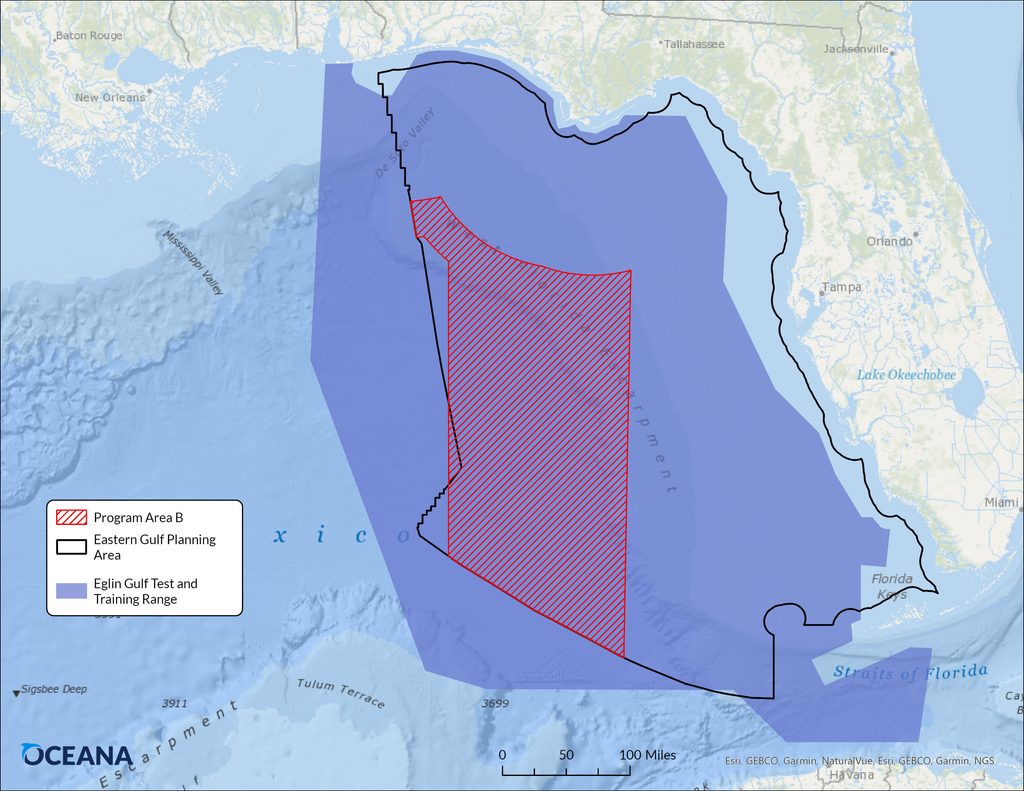
Now there is new legislation in Congress that, if passed, would provide permanent protections from drilling for the eastern Gulf, formalizing its status as a refuge from the fossil fuel industry. The bill opens a new round in the long-running battle to keep drilling out of the eastern Gulf and away from Florida. The industry has wanted access to the eastern Gulf for decades, and the current Trump administration draft plan for offshore drilling released late in 2025 proposes opening the area to drilling for the first time.
Various moratoria protecting the area have been issued by Congress and by multiple presidents, usually for periods of ten years. President Biden offered the area its greatest protection by issuing a permanent moratorium on eastern Gulf drilling. That action has been challenged in court and ignored by the Trump administration, which has instead honored President Trump’s ten year moratorium from his first term, which ends in 2032. After that the Trump administration proposes opening the area to drilling.
But new legislation introduced by Florida senators Rick Scott and Ashley Moody would head-off the Trump administration’s drilling plan by creating a moratorium tied to the boundaries of the Eglin Gulf Test and Training Range, a military testing area over open water that covers some 180,000 square miles. Recall that Congress makes the laws, and they can set the terms by which presidents can offer areas for drilling. The impetus for this legislation– Protecting Florida’s Offshore Military Readiness Act–is protecting what the Department of Defense calls an “irreplaceable resource,” as the military has long expressed concern that offshore drilling operations would encroach on its ability to test and train in this area that is vital to military operations.
In this case, what’s good for military training is also good for marine life and the environmental health of the eastern Gulf. That’s because this legislation would make permanent the eastern Gulf’s de-facto status as a refuge from the perils of offshore drilling.
The term refuge is one that humans understand well, as we need them too. Each of us has our own places of refuge to which we retreat for thought, rest, recreation and meaningful work. It could be a nearby park, a backyard workshop, a favorite waterway or a house of worship. For the Gulf’s rich marine life, which includes 22 threatened and endangered species, the eastern Gulf is the one area of refuge from the daily assault of the oil and gas industry.
Healthy Gulf will be advocating for this legislation and keeping you informed on its progress. We encourage you to continue to advocate in your communities and to your elected officials for more protections from offshore drilling for the people and wildlife of the Gulf coast.
Support the Protect Gulf Life Act
There are 22 species of endangered marine life in the Gulf of Mexico, and they are under attack by the Trump administration.
This legislation would restore desperately needed protections for Gulf wildlife under the Endangered Species Act, which is strongly supported by Americans.