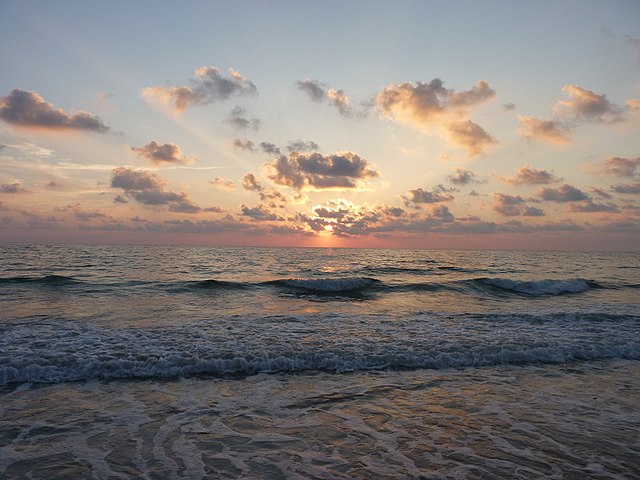
The oilfield infrastructure that’s a constant presence across coastal Louisiana is a backdrop to so many aspects of life in the state that I think we become blind to it. In the state that calls itself “Sportsman’s Paradise”, the sights, sounds and smells of production, refining and transport of oil and gas are very hard to escape. The environment that recreational fishers and hunters use and love is scattered with oilfield canals, stacks of wellhead valves called “Christmas trees”, and shallow water rigs with gas flares. We drive to our favorite fishing and hunting places going past and able to smell the refineries that light up the night sky as we drive to a boat launch or fishing or hunting camp in Shell Beach or Venice or Golden Meadow.
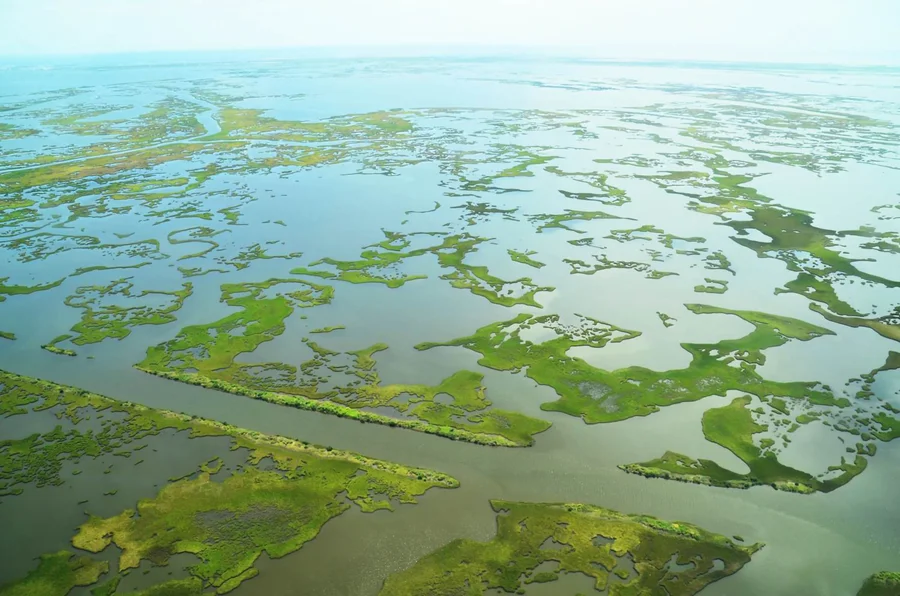
I caught my first redfish in 1971 in Barataria Bay next to a production platform – a metal framed catwalk with a series of tanks on it that was standing out in the water. When my father and I went duck hunting in 1977 in Venice near the mouth of the Mississippi River, we navigated back to the boat launch headed for the big white Getty Oil storage tanks that rose above the marsh near the Venice back levee. Later, from 1979 to 1997, my father and I would fish from late afternoon until well after sunset on the southeast shoreline of Lake Borgne, choosing days with good weather and a late afternoon falling tide so he could escape the worst of the summer heat. On those memorable nights we would fish until 9 p.m. and steer his boat back into Campo’s Marina at Shell Beach navigating by the red blinking lights of the towers of the gas compressor plant at Yscloskey in lower St. Bernard Parish.
This is how we live in south Louisiana from New Orleans to Lake Charles, and all along the industrialized Mississippi River. We know that we are living in a compromised landscape – a place that has been named a “sacrifice zone” for oil and gas. Despite the rigs, the pipelines, the catalytic cracking towers and flares, we continue to go hunting, fishing, crabbing, and take home, cook and enjoy the abundance that our marshes and waters afford us – even if we may feel a nagging doubt about how safe it is to consume what we catch and cook. We may also wonder whether this bounty will run out on a fast or slow time-frame, given the amount of coastal land loss and erosion destroying our precious wetlands. A notable film by folklorist Barry Ancelet about life in Cajun country was titled: “Spend it All” (1971) – and that’s one way to look at life in coastal Louisiana.
My question for people in Florida is “Why would you want this kind of landscape along your section of the Gulf?” The U.S. Department of Interior has laid out a series of lease sales over Continental Shelf water bottoms over the next decade that could attract oil and gas drilling to a section of the Eastern Gulf of Mexico that’s closer to Florida than any lease offerings in recent decades. This is the result of the 2025 Congressional Reconciliation Act.
The new 5-year plan for Outer Continental Shelf oil and gas exploration that the Bureau of Ocean Energy Management published for public notice offers vast new leasing opportunities to oil and gas exploration companies. Late in 2025 we saw a new proposal for drilling in extremely deep waters in the Gulf in the proposed BP Kaskida project that the Department of Interior has on hold until it can examine more background data.
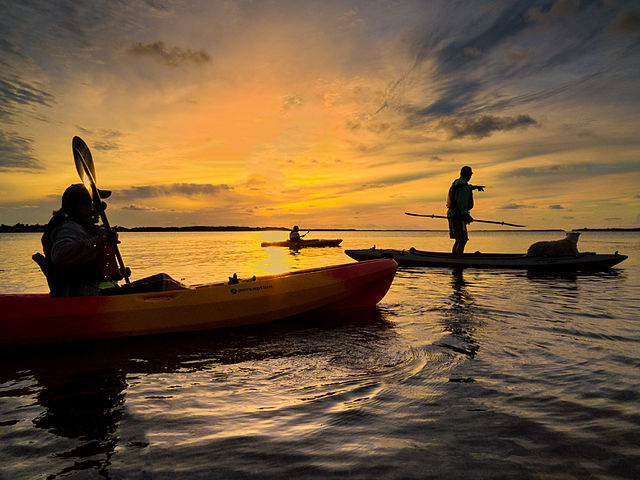
My heart aches in advance for the places in Florida that could see more oil and gas infrastructure, or that may have to deal with another spill as the Trump administration works with the oil companies to put more rigs in the Gulf in ever deeper waters.
I remember the Deepwater Horizon oil spill disaster very well. In April of 2010, I led a crew from the Mississippi Museum of Natural Science aquarium to attempt to net a cownose ray for the museum’s large salt-water aquarium in Jackson that depicts the marine life of the Mississippi Sound. We took that trip just before the oil reached the barrier islands of Mississippi. It was after the BP rig had already blown out and burned, causing 11 members of its crew to lose their lives. We were able to catch our ray near Petit Bois Island, but on the way back in, everyone on the trip wondered what would happen to the Mississippi Barrier Islands as the oil came ashore. It was a very sick feeling – the anticipation of an unavoidable heartbreak.
Florida and the Eastern Gulf of Mexico offer some of the most beautiful beaches and settings in the world. Florida shouldn’t have to sell its soul to the petrochemical industry and live among oil and gas infrastructure the way we do in Louisiana – or with the threat of spills and well blowouts. And nobody should ever have to experience the knot in the stomach that we all felt coming back across the Mississippi Sound to Pascagoula from Petit Bois Island that April day fifteen years ago after our trip to collect the rays.