
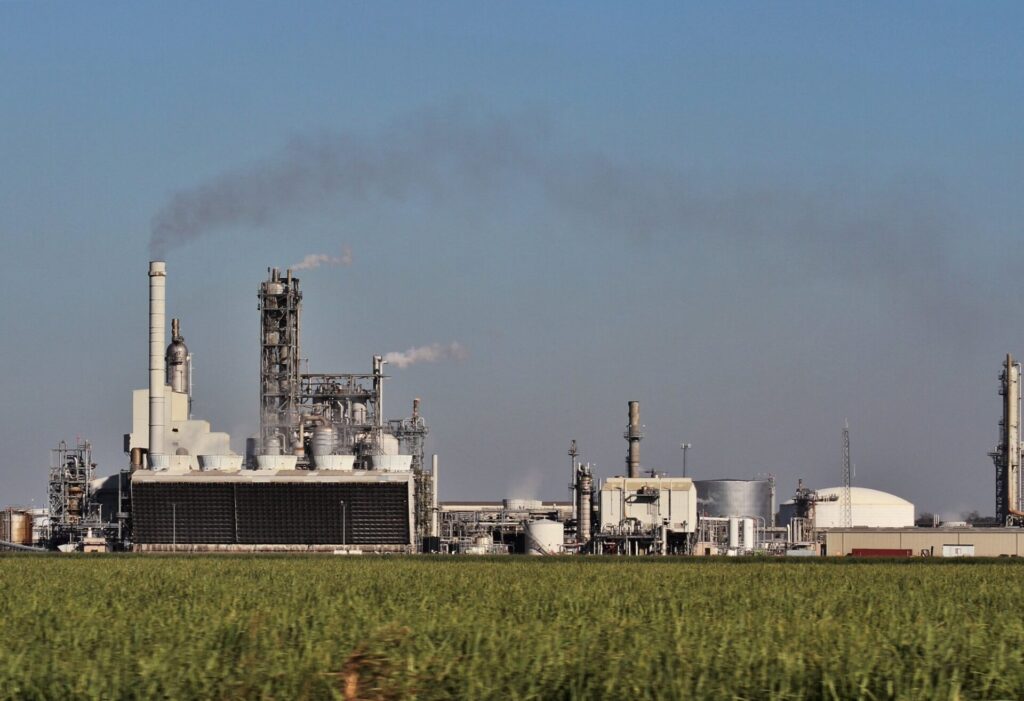
New Orleans, LA – According to a new report released by Healthy Gulf, existing fertilizer manufacturing facilities along the Mississippi River in Louisiana released over 3,221,085 pounds of fertilizer production waste into the Mississippi River in 2024 alone. Despite the disproportionate concentration of existing fertilizer production facilities, multiple new facilities have been proposed in Louisiana, threatening to more than double the amount of nitrogen impacting waterways and community health. Fertilizer pollution, including ammonia, nitrogen, and phosphorus is a key driver of the Dead Zone that forms at the mouth of the Mississippi every year.
“Cancer Alley,” the section of the Mississippi River in Louisiana stretching from Baton Rouge to New Orleans, is home to 25% of the United States’ petrochemical product production. Multiple fertilizer production facilities on this 85-mile stretch of river, including the largest ammonia fertilizer facility in the world CF Industries Donaldsonville Complex, currently release millions of pounds of fertilizer pollution into the Mississippi each year.
“The fertilizer cycle of pollution is felt most severely in the Gulf South,” said Matt Rota, Senior Policy Director for Healthy Gulf. “Pollution from fertilizer production facilities is often not prioritized in talks about reducing nitrogen and phosphorus fertilizer pollution in the Mississippi River Basin.”
Natural gas is fracked in Gulf states and then moved along pipelines to fertilizer facilities, which are concentrated along the Mississippi River in Louisiana. Fracking pollutes local communities, pipelines destroy essential wetlands, and these corporations consistently put communities in harm’s way for profit. Natural gas is used to make ammonia fertilizer – polluting communities on the fence lines of these facilities and contributing to health issues, such as asthma and cardiovascular diseases. The fertilizer is then shipped to the Midwest where it is applied on fields, and runs off into the water, polluting drinking water and causing toxic algae blooms. Finally that same fertilizer that was produced in Louisiana flows back down the Mississippi River as runoff and causes the second largest Dead Zone in the world. At no point are these companies held accountable for their excessive pollution.
“While the majority of Dead Zone-causing pollution does come from agricultural fields, a considerable amount additionally comes from these facilities. And unlike agricultural runoff, we have multiple underutilized regulatory tools to reduce this pollution,” said Rota.
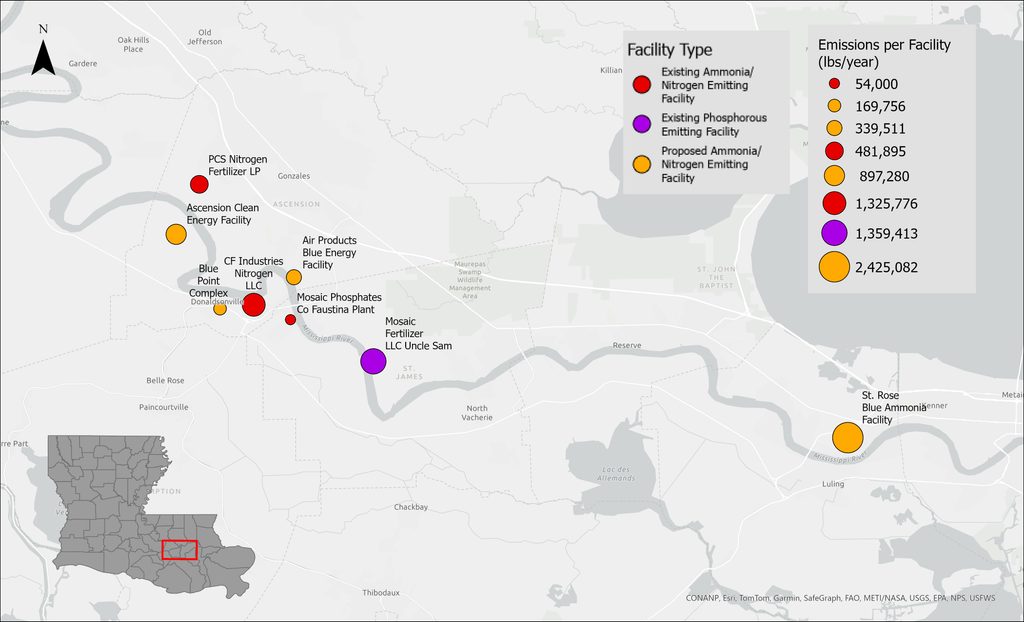
The 2024 discharge of fertilizer production waste from the three existing nitrogen/ammonia facilities is equivalent to the fertilizer pollution that flows off 134,212 acres of agricultural land in the midwest (approximately the landmass of Chicago). If the four proposed facilities discharged what they would be permitted for, this increase would be equivalent to the fertilizer runoff from approximately 300,000 acres of midwestern farmland.
Over the decades, tens of millions of pounds of fertilizer production pollution have been dumped into the Mississippi in just Louisiana. This report raises an opportunity to reduce the pollution that drives the Dead Zone and pollutes communities. State and federal agencies must require the reduction in this pollution and update pollution removal requirements that haven’t been modernized since the 1980s. No additional fertilizer facilities should be permitted in the Louisiana Mississippi River corridor until more stringent limits are placed on the nitrogen, ammonia, and phosphorus discharges from existing and proposed facilities.
###
Media Contacts
Senior Policy Director, Matt Rota, matt@healthygulf.org, 504-519-0846
Communications Director, Alex Horn, alex@healthygulf.org, 504-532-7065